One Child, Two Languages.

Okay, so let's talk about the language complex we have in this country. Ahn, ahn, it's really annoying.
"Don't speak Yoruba to my child, you will spoil her English"
Some of us actually believe that English is what shows that one is literate.
Recently sef, I have been questioning how literate I am.
I can't write well or read well in Yoruba but I can in English. Some people can read and write well in Yoruba but can not in English.
Abeg who brought about this confusion to this nation?
Infact it has now become a default setting. When you see a child, the language of communication is automatically English without even thinking.
Don't you think we are endangering our mother tongue?
English is good, no doubt. I Love it actually. But my first love is my first language: Yoruba.
But I'm not here to tell you which language is better off. That decision is up to you. I have come to tell you about bilingualism.
Bilingualism is the ability to speak two languages and this can be developed in children at an early stage.
They don't have to get to English/Yoruba class in school before they learn English/Yoruba. It makes the language boring because they have to learn it(with all it's grammatical jargons) and not acquire it.
Rather than say it's only English you want your child to acquire at a young age, why not introduce your child to bilingualism or multilingualism if you're up to it.
Let them acquire more than one language early in life and the moment they are able to achieve this, acquiring or learning any other languages becomes easy for them because language structures and skills are transferable.
Research has also shown that early exposure to two languages makes the children flexible thinkers which is an advantage.
You might want to ask,"won't the children get confused when they hear two languages spoken to them or spoken around them?" The answer is No, absolutely not. Children are inquisitive and curious so acquiring two languages early isn't a problem.
And just so you know, fluency in one language will not destroy fluency in the other. For instance, that you can speak you mother tongue shouldn't affect your fluency in English. If it does, then you didn't acquire English, you learnt it under the school masters (who aren't the original owners of the language). In passing now, it's better a child develops the mother tongue first. I know this is a bitter pill for some parents to swallow in Nigeria. But it's simply the truth. Learning a second language is easier when the child has mastered the first language(mother tongue) to a reasonable extent. But we aren't talking about language learning here but about language acquisition.
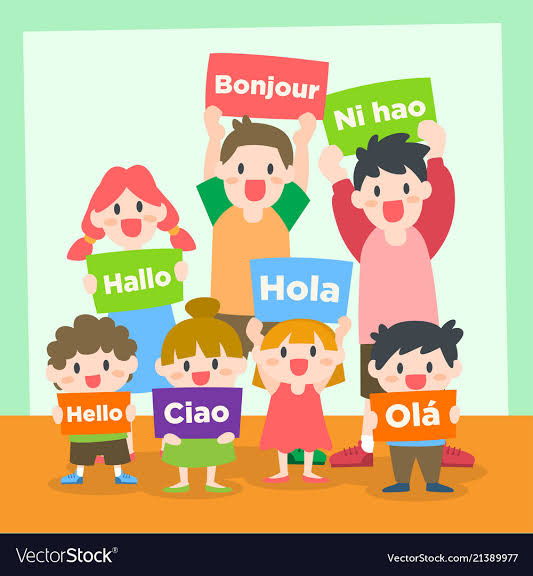
So back to bilingualism, your children will mix up both languages when they are talking. But calm down, no worries, they are not spoiling their English or Yoruba or any other languages they might be speaking, they are simply code switching: using words from one language when speaking another. That they mixed up words doesn't mean they are confused infact it shows they are in charge of the languages.
The question now is how do I help my children acquire two languages in their early years?
The answer is simple: Exposure and Need.
Expose them to both languages in different context with different people. And the other one, need, comes naturally. If they feel they need the language to communicate with others, they will acquire it.
Now note, don't force them. We don't have to teach them to speak, we just need to interact with them and they will acquire the language. They pick our language by imitating us.
Also, be aware that because you have exposed them to two languages doesn't mean they will be fluent in the two. The reason is that most times, one language is more important than the other to the children(from their own perspective). When children realise that one language is used more frequently than another at home or among their community of friends they see that language as more important.
So what do you do to foster the other language which they consider "less important?"
You simply provide opportunity for them to use the language in a way that it is not forced or artificial and make sure there is no temptation that will make them revert to their "more important" language when using the language they tag “less important.” A way to foster the less important language is to put the children in the midst of those who speak the language as their L1(mother tongue).
I heard of a young boy who speaks three languages. How did he get there? His mum speaks the three languages to him from birth. Now he is in his teens, he speaks the three languages without interference. Sometimes his mum and him get to decide which of the languages they want to communicate with for the day. How lovely that is!
There are many benefits to speaking more than one language, apart from the children being flexible thinkers, they become creatives, better problem solvers, open-minded, better listeners. All because from an early age they have been able to develop their brain functions by acquiring different languages, sounds, words, and the cultures attached to these languages.
Make your child bilingual or multilingual. Don't get them stuck in just one language especially when it's not even their mother tongue.